Program at a Glance

In this course Sharifa Oppenheimer takes you “behind the scenes” of her many years in the Waldorf classroom. Perhaps you are familiar with Joan Almon’s expression “When we walk into a Waldorf Early Childhood classroom we see the teachers gliding gracefully from task to task, like swans across a lake. But if we look below the water’s surface, we can see the swans’ feet are paddling quickly and powerfully.”
Together we will explore all the aspects of a typical Waldorf classroom day. You’ll learn the small tips that bring Waldorf’s lofty principles right down into the nitty-gritty of classroom life: how to streamline bread-baking, how to bring the children artistic and home life activities in a beautiful and efficient way, how to organize cleanup time so it seems like a waltz, how to entice and hold the children’s attention in circle and story time, how to anchor creative play time, what to do about childhood arguments, how to enrich your playground with loose parts and much, much more!
These simple, grounded tips and suggestions are meant to be a springboard for your own ideas and creativity. This work will help you manifest in your own classroom the spiritual principles that are the foundation of our work. In these ways, you create Heaven on Earth.
This is a HYBRID course, taking place Tuesday evenings live on Zoom followed by a release of supplemental material & open discussion forums on Ruzuku each Wednesday. Recordings of the Zoom classes will be embedded within the Ruzuku course for those who are unable to attend live.
Zoom classes:
TUESDAYS 6/16, 6/23, 6/30, 7/7, 7/14, 7/21
6:30 - 8 pm CENTRAL TIME
In order to cultivate a sense of togetherness and active participation, we warmly insist that your video be turned on during our live sessions. Please do your best to make arrangements so this is possible.
Ruzuku Modules:
WEDNESDAYS 6/17, 6/24, 7/1, 7/8, 7/15, 7/22
Ruzuku is our online course platform that allows for you to work at your own pace through the modules and activities. There is no deadline for completion of the material, except for CE credit, and it is indefinitely available to return to for a refresher!

Program Details
Tuition
$200 each;
groups of five or more receive 15% discount (reflected in shopping cart).
This course requires 7 enrollments by June 15th.
Continuing Education Credits
**Childcare providers and early childhood teachers can earn a certificate for 18 CE hours through completion of the activities and discussions in Ruzuku by July 31st. **
There is no deadline for completion of the material, except for CE credit, and it is indefinitely available to return to for a refresher!
The Curriculum
The curriculum is divided into six weekly classes:
Class One- Overarching Principle:
We discuss qualities of the teacher as well as explore self-care methods to support these qualities. These qualities underpin all classroom activities, such as the felt-experience of the teacher’s presence, gesture and movement. They are the foundation of her use of deliberate pacing and song; the way she “holds” the group in both structured activities and creative play time; how she gives individual attention and ways she and her colleague/assistant share these responsibilities.
Class Two- The Day’s Beginning:
We explore the following elements: welcoming children and parents into the day, the symbol of The Table as the heart of the classroom and ways to choreograph the artistic and home life activities at the table. Snack preparation at the table and including the children in this work, ways to “preside” at the table ~ to hold structure in a warm embrace ~ for snack time, snack cleanup and more.
Class Three- Circle & Story:
Circle Time is the heart of the Waldorf early childhood classroom’s rhythm. We explore the song, poetry, movement, traditional singing games and finger games that enchant the children and support brain development as well as social learning. Also, what about the ones who drift away or disrupt?
We also delve into the essential power of Stories. We discuss categories of age-appropriate stories, as well as how to engage all the ages of children, how to deepen into and “elongate” the story, and how to handle the ones whose attention drifts. We also look at story opportunities that arise throughout the day and how to respond with a “homemade” story for the moment.
Class Four- Creative Play Indoors:
We discover the developmental stages of play, beginning with infancy, and ways to foster play in each of these stages. We learn how, as the children play, the teacher’s presence and her “work of the day” anchor the children through the miracle of imitation. We explore “loose parts” play, and ways the teacher can help the children to deepen-into and expand their games. Also, we will explore what steps to take when the play becomes “bumpy.”
Class Five- Creative Play Outdoors
& The Playground:
We look to current research in order to know the benefits of a “natural” playground, the health-giving gift of trees, the brain-enhancing support of discovery outdoors, the freedom of learning earth-sciences through hands-on connection. We discover why the teacher’s connection to nature lays the foundation for the child’s. Also we explore: how to bring our “indoor activities” out to the playground; how to enhance the playground with loose parts, a justification for mixed-age play outdoors; how to accommodate the changes in weather and more.
Class Six- Love’s Other Name ~ Discipline:
Our goal with Discipline is to lead the child toward self-discipline. We will learn how to foster self-discipline beginning with collaboration ~ sharing tasks with them. We explore an age-specific “timeline” of moving from collaboration toward age-appropriate responsibility. For the five and six year olds, we will also explore the realm of consequences: natural consequences, logical consequences and “righting the balance.” We’ll move through a continuum of “discipline responses” and explore a “disagreement solution process.” All of this is held within the loving embrace of the teacher’s wide expansive heart.
About the Instructor
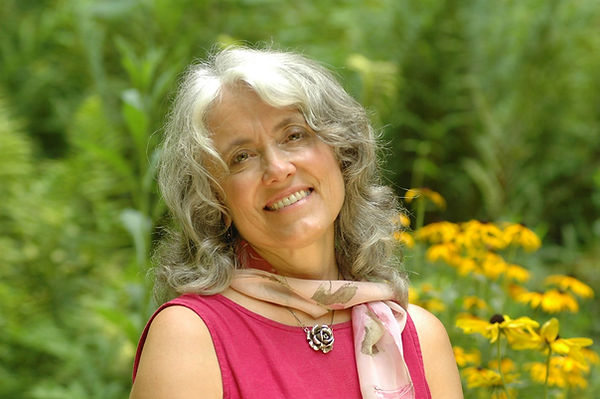
Sharifa Oppenheimer
Sharifa Oppenheimer was the founding teacher of the Charlottesville Waldorf School as well as The Rose Garden, a Waldorf early childhood home-program. She is the author of numerous well-received articles and books, including Heaven on Earth: A Handbook for Parents of Young Children and its companion workbook How To Create The Star of Your Family Culture, as well as With Stars in Their Eyes: Brain Science and Your Child’s Journey Toward the Self. Her research is devoted to exploring the ways in which the latest findings in brain science support Steiner principles. She now teaches collaboratively with LifeWays and continues to explore and write about other aspects of profound connection, particularly the family’s need for deep connection to Nature. She teaches online Kinship with Nature classes, and her most recent books A Litany of Wild Graces and Rewilding the Human Heart explore the family’s biological and spiritual inter-being with our other-than-human relations.